Humana Medicare Supplement Travel Coverage Abroad: A Comprehensive Guide

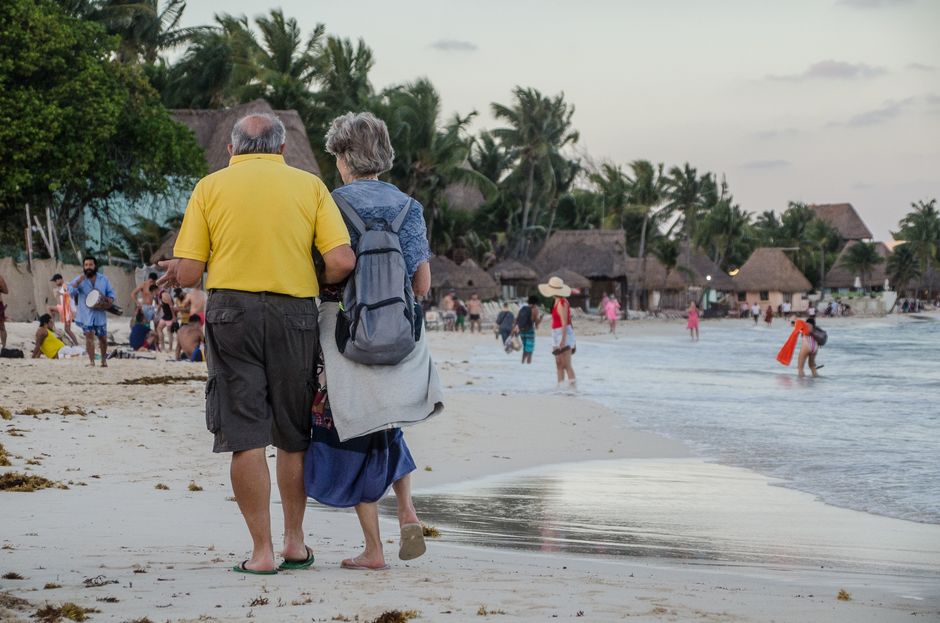
Picture this: you’ve planned the perfect European vacation—flights are booked, hotels reserved, and you’ve mapped out every museum, café, and scenic overlook. But then, halfway through your trip, you slip on a cobblestone street in Rome, twisting your ankle. Or you develop a sudden fever in Paris. You need medical care, and that’s when the question hits: “Does my Medicare cover me here?” For millions of Americans with Medicare, the answer is a resounding “no” for most care outside the U.S. That’s where understanding Humana Medicare Supplement travel coverage abroad becomes critical.
Original Medicare (Parts A and B) provides extremely limited coverage outside the United States, leaving you vulnerable to potentially enormous medical bills if you get sick or injured while traveling internationally. This gap can turn a dream vacation into a financial nightmare. Medicare Supplement plans, also known as Medigap, are specifically designed to fill these “gaps” in Original Medicare coverage—and one of the most valuable benefits they offer is foreign travel emergency coverage. As a leading provider, Humana offers a range of Medigap plans, but the details of their travel benefits can be confusing. This guide will break down exactly what Humana Medicare Supplement plans cover when you’re abroad, what they don’t, and the smart steps you need to take to travel with confidence.
Key Takeaways: Your Quick Guide to International Coverage
Before we dive deep, here are the essential facts you need to know about Humana Medicare Supplement travel benefits:






- Not All Medigap Plans Include Travel Coverage: Only plans C, D, F, G, M, and N (and their high-deductible versions for F and G) include the standardized foreign travel emergency benefit. If you have Plan A, B, or K, L, you do not have this coverage through your supplement.
- There’s a Lifetime Limit and Deductible: The coverage has a $50,000 lifetime maximum and typically requires you to pay a $250 deductible each calendar year before benefits kick in. It then pays 80% of eligible costs, up to the lifetime limit.
- It’s for Emergencies Only: This isn’t for routine check-ups or planned treatments overseas. Coverage only applies during the first 60 days of your trip and only if the care is needed for a sudden, acute illness or injury that would require immediate treatment.
- You Must Meet Specific Conditions: The care must generally begin within the first 60 days of your trip, and the foreign country’s hospital or doctor cannot be reasonably expected to bill Medicare directly (which they almost never do).
- Supplemental Travel Insurance is Still Highly Recommended: Given the $50K cap, 80% coinsurance, and exclusion of non-emergency care, a separate travel medical insurance policy is often a wise investment for comprehensive protection, especially for longer trips.
- Always Carry Your Insurance Cards and Contact Information: Keep your Humana Medigap ID card and a clear understanding of the claims process with you when you travel. You will likely need to pay upfront and file for reimbursement.
Understanding the Gap: Why Original Medicare Falls Short Overseas
To appreciate the value Humana’s Medicare Supplement travel coverage adds, you first need to understand the stark limitations of Original Medicare outside U.S. borders.
The Hard Limits of Medicare Part A & B Abroad
Original Medicare is primarily designed for healthcare received within the United States and its territories. Its coverage abroad is so limited it’s almost nonexistent for most travelers. Here are the only three scenarios where Medicare Part A (Hospital Insurance) or Part B (Medical Insurance) might provide any coverage:
- You’re in the U.S. when a medical emergency occurs, but the nearest hospital that can treat you is in a foreign country (e.g., you’re near the Canadian or Mexican border).
- You’re traveling through Canada without unreasonable delay between Alaska and another U.S. state when a medical emergency arises, and the closest hospital is in Canada.
- You live in the U.S. and need non-emergency inpatient hospital care in a foreign country because it’s closer to your home than the nearest appropriate U.S. hospital (an extremely rare situation).
For the vast majority of international vacations, cruises, or visits to family abroad, none of these exceptions apply. If you break your hip in Lisbon or get appendicitis in Tokyo, you are responsible for 100% of the costs.
Editorial Insight: “Many Medicare beneficiaries are shocked to learn their coverage doesn’t travel with them. They’ve paid into the system for decades and assume it provides a global safety net. This misconception is one of the biggest financial risks facing senior travelers. Understanding that Medicare is fundamentally a domestic program is the first step toward proper planning.”
The Real-World Cost of an Overseas Medical Emergency
Medical costs internationally can vary widely but are often substantial. A simple emergency room visit for a minor injury in Western Europe can easily cost $1,000-$3,000. More serious issues like a heart attack, stroke, or serious accident requiring hospitalization, surgery, and evacuation can soar into the hundreds of thousands of dollars. Without coverage, these bills must be paid out-of-pocket, which could devastate retirement savings.
How Humana Medicare Supplement Travel Coverage Works
Humana, as a major insurer offering standardized Medigap plans, provides the foreign travel emergency benefit on the specific plans that include it. The benefit is standardized by the federal government, meaning the core provisions are the same regardless of whether you buy from Humana, UnitedHealthcare, or any other carrier in your state. Here’s exactly how the Humana Medicare Supplement travel coverage abroad functions.
The Core Benefits: Deductible, Coinsurance, and Lifetime Max
The coverage acts as a secondary layer for qualified emergencies. After you meet a $250 calendar-year deductible for foreign travel emergency services, the plan pays 80% of the Medicare-approved amount for medically necessary emergency care. This payment continues until you reach the plan’s $50,000 lifetime maximum. It’s crucial to note that the “Medicare-approved amount” is a U.S.-based calculation. Since foreign providers don’t accept Medicare assignment, the “approved amount” is determined by Humana, which may lead to balance billing where you are responsible for the difference between the provider’s charge and what Humana approves.
What Qualifies as a “Foreign Travel Emergency”?
The benefit has strict definitions. Coverage applies only when all of the following are true:
- The medical care is for a sudden and acute illness or injury.
- The illness or injury occurs during the first 60 consecutive days of your trip outside the U.S.
- A doctor determines your medical condition requires immediate care.
- The care is received in a foreign country (any country other than the United States, its territories, and possessions).
It explicitly does not cover routine, follow-up, or preventive care received abroad. For example, if you have a chronic condition like diabetes and need to see a doctor for a prescription refill while traveling, that cost would not be covered.
Comparing Your Options: Supplement Plans vs. Separate Travel Insurance
While the Humana Medicare Supplement travel coverage abroad is a valuable perk, it’s not a complete travel medical solution. Let’s compare it to standalone travel medical insurance to see where each excels.
| Feature | Humana Medigap Foreign Travel Benefit | Standalone Travel Medical Insurance |
|---|---|---|
| Coverage Trigger | Sudden, acute emergency only | Broader; can include emergency & sometimes acute onset of pre-existing conditions |
| Coverage Limit | $50,000 lifetime maximum | Often $50,000 – $1,000,000+ per trip |
| Cost Sharing | 80% after $250 deductible | Varies (100% common, some have deductibles) |
| Trip Duration Limit | First 60 days of trip | Varies by policy (often 30-180 days) |
| Non-Emergency Care | Not covered | Rarely covered |
| Medical Evacuation/Repatriation | Generally NOT covered | Almost always included, often with high limits |
| Cost | Included in Medigap premium | Separate premium, typically $50-$300+ per trip |
The table reveals the clear trade-off. Your Humana supplement provides a valuable baseline of emergency coverage at no additional premium, but with severe caps and limits. Standalone insurance costs extra but offers significantly higher financial protection, especially for the catastrophic costs of medical evacuation, which can exceed $100,000.
Deep Dive: When to Rely on Your Supplement vs. Buying Extra
Scenario 1: The Short, Low-Risk Trip
For a brief, one-week trip to a country with excellent and affordable healthcare (like Thailand or Costa Rica for some procedures), a healthy beneficiary might feel comfortable relying solely on their Humana Medicare Supplement travel coverage abroad. The $50,000 lifetime limit is a concern, but for a minor emergency, it would likely suffice. The key is having sufficient savings to cover the 20% coinsurance and any potential balance billing.
Scenario 2: The Extended Cruise or International Tour
If you’re taking a month-long European river cruise or a multi-country tour, the 60-day limit isn’t an issue, but the risk exposure is higher. A serious medical event requiring hospitalization and evacuation could blow past the $50,000 cap instantly. In this case, purchasing a travel medical policy with $250,000+ in primary coverage and $500,000 in evacuation benefits is a prudent move. Your Humana benefit would act as a secondary layer if needed.
Scenario 3: Travel to Remote or High-Cost Regions
Traveling to remote areas (like on an African safari) or to extremely high-cost countries (like Switzerland or Japan) significantly increases both the likelihood of needing evacuation and the potential cost of care. Here, standalone insurance isn’t just recommended; it’s essential. The evacuation coverage alone justifies the cost.
Navigating the Claims Process for Humana Travel Coverage
If you need to use your Humana Medicare Supplement travel coverage abroad, you’ll almost certainly need to file a claim for reimbursement. Unlike in the U.S., most foreign hospitals and doctors will not bill Humana directly.
Step-by-Step: What to Do During and After an Emergency
- Seek Necessary Care: Your health comes first. Go to the nearest appropriate medical facility.
- Pay Upfront & Get Detailed Documentation: Be prepared to pay with a credit card or cash. Get an itemized bill in English (if possible) that includes diagnosis codes, procedure codes, dates of service, and the provider’s details.
- Contact Humana: Notify Humana of the emergency as soon as practically possible. They can guide you on the specific claims process.
- Submit a Claim Form: Upon returning home, you’ll need to complete a Foreign Travel Claim Form (available from Humana). Attach all original, itemized bills and receipts, and a copy of your travel itinerary/passport stamps proving the trip dates.
- Await Reimbursement: Humana will review the claim, determine the “Medicare-approved” amount, and send you reimbursement for 80% of that amount (minus your $250 deductible if not yet met for the year).
Keep meticulous records. The process can take several weeks to months, and you may need to communicate with the foreign provider to get the proper documentation.
Common Pitfalls and How to Avoid Them
Even with the best intentions, travelers make mistakes that can jeopardize their coverage or lead to huge out-of-pocket expenses.
- Assuming All Medigap Plans Are the Same: Not verifying that your specific Humana plan letter (C, D, F, G, M, or N) includes the travel benefit is the most fundamental error. Always check your plan’s Summary of Benefits.
- Confusing the 60-Day Clock: The coverage is only for emergencies occurring in the first 60 days you are outside the U.S. If you’re on a 90-day trip and have an emergency on day 75, you have no supplement coverage.
- Forgetting About the Lifetime Maximum: The $50,000 cap is for your entire lifetime. A serious emergency on one trip could exhaust this benefit, leaving you without any supplement travel coverage for all future trips.
- Overlooking Medical Evacuation: A medical jet flight back to the U.S. can cost more than $150,000. Your Humana plan does not cover this. This is the single strongest argument for supplemental travel insurance.
- Not Carrying Proof of Insurance & Contact Details: In an emergency, you or a travel companion need immediate access to your Humana ID card and the international customer service number. Store a digital copy in your phone and carry a physical copy.
- Failing to Notify Humana Promptly: While you should focus on care first, delaying notification can complicate the claims process. Make the call as soon as the situation is stable.
Frequently Asked Questions (FAQ)
What if I have a Humana Medicare Advantage Plan instead of a Supplement?
This is a critical distinction. Humana Medicare Advantage (Part C) plans are completely different from Medicare Supplement (Medigap) plans. Most Medicare Advantage plans do not include routine coverage outside their service area (which is typically a region within the U.S.). Some Medicare Advantage plans may offer a supplemental benefit for foreign travel emergencies, but it is rare, non-standardized, and often more limited than the Medigap benefit. You must check your specific Advantage plan’s Evidence of Coverage document. Never assume your Advantage plan has the same travel benefits as a Humana Medicare Supplement plan.
How does the Humana Medicare Supplement travel coverage abroad work on a cruise?
Cruises present a unique situation. If the cruise ship is within six hours of a U.S. port, it might be considered within the U.S. for Medicare purposes (for dialysis, for example), but this is a gray area. For the Medigap foreign travel benefit to apply, the care must be received in a foreign country. If you are treated by the ship’s doctor while in international waters or are evacuated to a hospital in a foreign port, your Humana supplement coverage would likely apply, subject to all the usual rules (60-day limit, emergency, etc.). It’s always wise to purchase cruise-specific travel insurance that covers medical care onboard and evacuation.
Can I use my coverage for a medical emergency in Canada or Mexico?
Yes. The benefit applies to any country other than the United States and its territories/possessions. So, Canada, Mexico, the Caribbean islands (except Puerto Rico and the U.S. Virgin Islands), Europe, Asia—all are considered “foreign countries” for this benefit. The same rules, deductibles, and limits apply regardless of the destination.
Does the coverage include prescription drugs I might need abroad?
The foreign travel emergency benefit is for the costs of emergency medical services (doctor, hospital, ambulance). It does not cover the cost of filling a prescription at a foreign pharmacy, even if it’s for a medication related to the emergency. You would pay out-of-pocket for prescriptions. Remember, Medicare Part D (drug coverage) also generally does not cover medications purchased outside the U.S. Always travel with an adequate supply of your regular medications in their original containers.
Should I buy a separate travel insurance policy even with my Humana supplement?
For most travelers, the answer is yes, especially for trips longer than a week, travel to remote areas, or if you have significant pre-existing health conditions. The rationale is threefold: 1) To obtain medical evacuation coverage, which is absent from your supplement. 2) To get much higher primary coverage limits ($250K-$1M+) that protect you from catastrophic costs exceeding your $50K lifetime supplement max. 3) For trip cancellation/interruption benefits, which no Medicare-related plan provides. Think of your Humana benefit as a good foundation, and travel insurance as the essential safety walls and roof.
What happens if I exceed the $50,000 lifetime maximum?
Once you have received $50,000 in benefits from the foreign travel emergency benefit over your lifetime, the coverage ends permanently. Humana will not pay any further claims for foreign travel emergencies under your Medigap plan. This is a lifetime cap, not an annual one. This stark limit is why relying on it alone for major trips is risky. If you exhaust it, your only options for future travel medical coverage would be standalone travel insurance policies.
How do I find out the specific details of my Humana plan’s travel coverage?
The definitive source is your plan’s Outline of Coverage or Summary of Benefits booklet. You can find this in your online Humana account, request a copy from customer service, or review the plan documents you received when you enrolled. Look for the section titled “Foreign Travel Emergency” or similar. You can also call the member services number on your Humana ID card and ask a representative to explain the foreign travel benefit specifics for your plan letter.
Conclusion
Navigating healthcare while traveling internationally as a Medicare beneficiary doesn’t have to be a source of anxiety. Your Humana Medicare Supplement travel coverage abroad provides a crucial, built-in layer of financial protection for unexpected emergencies, filling one of Medicare’s most significant gaps. By understanding its strengths—the 80% coverage after a deductible for acute emergencies—and its clear limitations—the $50,000 lifetime cap, lack of evacuation coverage, and 60-day window—you can make informed decisions. For many, pairing this supplement benefit with a well-chosen travel medical insurance policy creates the comprehensive safety net needed for true peace of mind. So review your plan details, assess the risks of your next adventure, and travel smart. The world is waiting, and with the right preparation, you can explore it confidently, knowing you’ve protected yourself from one of travel’s few predictable surprises: the unpredictable need for medical care.